
Business
5 Big Barriers to Communication – and 5 Ways to Fix Them


Most people assume they’re decent communicators. They speak clearly, they listen (mostly), and they rarely cause obvious offence. Yet in every organisation, the same friction keeps appearing: projects stall because someone misread the brief, a good idea dies in a poorly run meeting, or a relationship between two colleagues quietly sours because a message landed the wrong way.
Communication breakdown is almost never dramatic. It’s the slow drip of small misalignments — and the cost is real. Here are five of the most common barriers to communication at work, along with practical ways to get past them.
Barrier 1: You’re Not Actually Hearing What They’re Saying
The most widespread communication problem isn’t speaking — it’s listening. More precisely, it’s the gap between what someone says and what you think they said. You hear the words, but you interpret them through your own assumptions, your own priorities, and whatever’s already on your mind.
Think of a manager who asks a colleague to “sort out the report by Friday.” The colleague delivers a lightly edited version on Thursday afternoon. The manager expected a full restructure. Neither person was wrong in what they understood — they just weren’t aligned. And nobody checked.
The fix is to get into the habit of reflecting back. Before you act on an instruction, or before you close a conversation, briefly summarise what you understood. Not defensively — just practically. “So just to confirm, you’re looking for a full rewrite, not just a proofread?” That one sentence could have saved an afternoon of rework.
It sounds obvious. But very few people do it consistently.
Barrier 2: You’re Trying to Say Too Much at Once
Information overload is one of the most overlooked barriers to communication in workplaces — partly because it comes from a good place. You want to be thorough. You want to give context. You want to make sure nothing is missed.
The result, though, is that people stop listening halfway through, retain the last thing you said, or simply glaze over. A five-minute explanation of three interconnected issues, delivered without a clear structure, leaves the other person more uncertain than when you started.
The better approach: lead with what matters most. State your point first, then provide context if it’s needed, then invite questions. In written communication — email especially — one clear message per message is a rule worth adopting. Long emails with multiple threads buried inside them get partially answered at best and ignored at worst.
If you find yourself saying “there’s one more thing” more than once in a conversation, that’s a signal to stop, restructure, and come back when you’re clearer about what you actually need to communicate.
Barrier 3: Staying Quiet When You Should Speak Up
Shyness, self-doubt, and a fear of looking foolish are among the most personal communication challenges — and among the most damaging when left unaddressed. People hold back a concern in a meeting. They don’t challenge an assumption that turns out to be wrong. They sit on a good idea for weeks because the moment never felt right.
This affects people at every level, not just the new or junior. Even experienced professionals go quiet in environments where speaking up feels risky.
The most effective remedy isn’t a confidence programme or a pep talk — it’s structure. When people know they’ll be directly invited to contribute, the pressure of volunteering a voice drops considerably. If you’re running a meeting, go round the table. If you’re managing a team, have one-to-ones where there’s no agenda except “what are you thinking about?” If you’re the quiet one, practise contributing small things regularly. The longer you stay silent, the harder it becomes to break in.
Barrier 4: Emotions in the Room
Frustration, stress, defensiveness, and anxiety all distort communication in ways that are easy to recognise in other people and very hard to see in ourselves. When emotions run high, the content of a conversation matters less than the tone — and tone is almost impossible to manage when you’re reactive.
Consider someone who has just learned that a major project deadline has moved forward by two weeks. They go to a team meeting and don’t mention how stressed they feel. Instead, they speak more bluntly than usual, dismiss a couple of suggestions, and leave the room having technically communicated all the facts — but having also quietly unsettled three colleagues.
The principle here isn’t to suppress emotions. It’s to name them appropriately. There’s a significant difference between “that’s a terrible idea” and “I’m under a lot of pressure right now and I want to make sure we’re not adding complexity.” Both can come from the same feeling; one is productive, one isn’t. Pausing before reacting — even briefly — and asking whether the emotion is shaping the message is a habit that takes time to build but pays back considerably.
Barrier 5: When Technology Gets in the Way
Digital tools have made communication faster. But they haven’t always made it better. Misunderstandings driven by technology are now one of the more persistent communication barriers in modern work — and the problem isn’t the tools themselves, it’s the assumptions people bring to them.
Tone is almost invisible in text. A short reply to a thoughtful message can read as dismissive even when it isn’t. An exclamation mark that feels friendly to the sender can come across as passive-aggressive to the recipient. And messages sent late at night, even with no expectation of a response, can create a low-level sense of pressure that builds over time.
The discipline here is to match the tool to the message. Quick, transactional updates work well over instant messaging. Anything complex, sensitive, or emotionally loaded almost always needs a voice conversation or a video call. If you find yourself writing and rewriting a message because you can’t get the tone right, that’s usually a signal that you shouldn’t be writing it at all — you should be picking up the phone.
What Happens When You Fix These Things
The individual benefits are immediate. You spend less time correcting misunderstandings, you feel more confident in meetings, and your relationships with colleagues are less strained. Over time, you become someone people actually want to work with — not just someone they work alongside.
For a team, the gains are substantial. Fewer projects go off-track because of miscommunication. Meetings become shorter and more decisive. People speak up earlier, which means problems surface while they’re still small.
And for the company as a whole, the compounding effect is significant. Poor internal communication quietly erodes productivity, drives turnover, and creates the kind of low-trust culture where good people stop trying. Organisations where people communicate well — clearly, honestly, and without unnecessary friction — don’t just function more smoothly. They adapt faster, make better decisions, and retain the kind of talent that has choices.
None of these barriers to communication are solved overnight. But they are all solvable, and the starting point is simpler than people expect: pay more attention to how you’re communicating, not just what you’re saying.

Choosing the right partner can have a bigger impact on a Dynamics project than the software itself. Even a strong platform can fall short if implementation is rushed, poorly scoped, or handled by a team that does not fully understand the business. That is why the selection process deserves serious attention from the start.
Many companies focus first on pricing, timelines, or certifications. Those things matter, but they do not always show how well a partner will perform when the real work begins. What matters more is how they plan, communicate, solve problems, and guide the business through change.
A reliable Dynamics implementation partner should do more than configure the system. They should help your business make better decisions, reduce avoidable risk, and build a solution that works well after go-live, not just during the project phase.
This matters because implementation affects everything around the system: processes, reporting, integrations, data quality, user adoption, and long-term support. The right partner brings structure and confidence. The wrong one can leave you with delays, confusion, and a platform that never delivers its full value.
Below are ten traits that usually separate dependable implementation partners from those that only sound good in early conversations.
1. They understand the business, not just the product
Product knowledge is important, but it is only one part of the job. A partner may know Dynamics well and still fail to connect it to the way your business actually works.
Why this matters
A reliable partner should be able to discuss:
- Your business goals
- Current pain points
- Process gaps
- Reporting needs
- Operational dependencies
- Adoption challenges
They should not jump straight into features without first understanding what the business needs to improve.
2. They ask strong questions early
One of the clearest signs of a good partner is the quality of their discovery process. Good partners do not rush to propose a solution before they fully understand the situation.
What this looks like
They ask about:
- Current systems
What is working today, and what is not?
- Business priorities
What outcomes matter most from the project?
- Internal readiness
How much time, ownership, and change capacity does the business have?
- Risks and dependencies
What could affect cost, scope, or timing?
Strong questions early usually lead to fewer surprises later.
3. They are honest about complexity
A weak partner often makes everything sound easy. A strong one explains where the real challenges are and helps you prepare for them.
Why honesty matters
Dynamics projects often involve:
- Data migration issues
- Process redesign
- Integration dependencies
- Change requests
- Testing delays
- Business-side decisions
A reliable partner does not hide these realities. They help you manage them before they become bigger problems.
4. They balance standardization and flexibility well
One of the most important implementation decisions is knowing what should stay standard and what genuinely needs to be customized.
The right balance saves time and money
A strong partner knows that:
- Too much customization
Can increase cost, complexity, and future maintenance effort.
- Too much standardization
Can create a poor fit if the business has real operational needs that the standard setup cannot handle properly.
The best partners challenge unnecessary customization but remain practical when the business truly needs something tailored.
5. They communicate clearly with both business and technical teams
A reliable partner should be able to speak to executives, process owners, IT teams, and end users without creating confusion.
Clear communication keeps projects aligned
This means they can:
- Explain decisions in simple terms
- Outline trade-offs clearly
- Raise risks early
- Document requirements properly
- Guide meetings with structure
A project usually runs better when people understand not only what is happening, but also why.
6. They have relevant delivery experience
Experience matters, but relevance matters more. A partner may have many projects under their belt, yet still not be the right fit for your business.
What relevant experience really means
Look for a partner that understands:
- Your type of project
Implementation, migration, rescue, optimization, or phased rollout.
- Your business size
Mid-sized, enterprise, single entity, or multi-entity complexity.
- Your industry realities
Reporting, compliance, workflow, and operational expectations in your sector.
A partner who understands similar environments usually makes better decisions faster.
7. They treat data seriously
Many projects struggle not because of software setup, but because the data going into the new system is incomplete, inconsistent, or poorly prepared.
Good partners do not treat data as a late task
They should help you think through:
- What data needs to move
- What should be cleaned first
- How legacy fields map to the new environment
- How the migrated data will be validated
- Who owns data decisions on the business side
If a partner speaks lightly about data migration, that is usually a warning sign.
8. They are disciplined about testing
Testing is the process by which a system demonstrates whether it can support real business activity. Reliable partners take this phase seriously and do not reduce it to a quick technical check.
Good testing protects go-live
A dependable partner should plan for:
- Functional testing
To confirm that workflows and configurations work properly.
- Integration testing
To make sure connected systems exchange data correctly.
- User acceptance testing
To validate that real users can complete real scenarios.
- Issue tracking and resolution
So problems are logged, prioritized, and fixed in a controlled way.
Strong testing discipline often makes the difference between a smooth launch and a stressful one.
9. They stay engaged after go-live
Go-live is a milestone, not the end of the journey. The first few weeks after launch often reveal practical issues, access gaps, training needs, and process adjustments.
Reliable partners plan for stabilization
They should be able to explain:
- What hypercare looks like
- How issues are logged and resolved
- Who supports users after launch
- How urgent problems are escalated
- Whether they provide ongoing support and optimization
A partner that disappears too quickly after go-live can leave the business struggling at the most important stage.
10. They focus on long-term value, not just project completion
A weak partner focuses on tasks, milestones, and handover. A strong one thinks beyond launch and assesses whether the system will continue to support the business well over time.
Long-term thinking changes project quality
This means they care about:
- User adoption
- Reporting usefulness
- Scalability
- Supportability
- Future improvements
- Cleaner business processes
That mindset usually leads to better implementation choices from the beginning.
How to use these traits in partner selection
It is one thing to know what good looks like. It is another to test for it during evaluation.
Ask practical questions
When speaking with potential partners, ask them:
- How they run discovery
- How they handle scope changes
- How they approach customization
- How they manage testing
- Who will actually work on the project
- What post-go-live support includes
- What risks do they see in projects like yours
Their answers will usually tell you more than a generic proposal or polished slide deck.
Final thoughts
A reliable Dynamics implementation partner does much more than deliver system setup. They help shape decisions, reduce project risk, improve business fit, and support stronger results after go-live.
The best partners stand out through business understanding, strong communication, honest planning, disciplined delivery, and a real focus on long-term value. Those qualities may not always be the loudest in early conversations, but they are often the ones that matter most once the project begins.
Choosing well at the start can save a business from major costs, delays, and rework later. More importantly, it increases the chance that the implementation will actually improve how the business works.


The loan approval process has never been easier in India where thousands of loan applications are rejected on a daily basis. But not because people are not in need of the money. But the reason they walk unprepared is because they walk unprepared. Lenders are not your enemy. They just go by a checklist and as long as your profile hits the right checks, then you are automatically approved. Whether you are salaried, self-employed, or somewhere in between, a 1 lakh loan is absolutely within reach if you know exactly what to prepare before hitting that apply button.
Tip 1: Improve Your Credit Score Before even you apply.
And before a lender reads your name, he reads your number. A CIBIL score of more than 700 makes the approval rate to shoot up. The automatic caution flags are activated at anything less than 650. No outstanding dues, no simultaneous applications to more than one lender, and paying credit card bills punctually at least 3 months. Maintain your credit utilisation ratio at less than 30 percent of your limit. Such minor measures generate a visible score difference in 60 to 90 days and make your profile look low-risk even with the first look.
Tip 2: Have Your Income Presented Professionally.
Majority of the rejections occur not due to low income but due to poorly submitted income evidence. Salaried candidates are required to provide last 3 months salaries slip and Form 16. Self-employed individuals require the ITR filings at least 2 years in a row. Bank statements with regular monthly credits speak volumes in and of themselves. In case you have any side income that comes in form of freelancing or rent, record all the rupees. Stability is much convincing to the lender than a single huge deposit in your account.
Tip 3: Select the appropriate platform — Go Digital.
Traditional banks take days. Sometimes weeks. A digital loan application certainly takes around 10 minutes, does not need branch visits, & delivers approval decisions within hours using AI-based underwriting. Applications are processed on platforms reputable platforms 24/7, even over the weekend and public holidays. Action The whole process of application to disbursal can take place within one day realistically.
Tip 4: Maintain Your Debt-Income Ratio.
This is the mute murderer of loan applications that are never perceived before by most people. When you already have an EMIs of 40 per cent, or more, of your monthly earnings, new lenders become truly alarmed– despite what salary you earn. Get the total monthly commitments against the amount you be earn before you apply. Clean, low obligation profile is an indication that you are comfortable in managing one more EMI without causing financial strain.
Tip 5: Select a Realistic Level of Tenure and loan amount.
Calculate online with any EMI calculator in advance – it takes 2 minutes and demonstrates lenders that you have done your research. Considerable borrowing will create credibility prior to the disbursement of the first rupee.
Conclusion
There is never a time when it would be a matter of luck to get approved you have to prepare. Get to know your credit score, show your income in a neat way, use the appropriate platform, and do not make the obvious mistakes that silently kill a program. Go into the process educated and approval gets in your inbox before you even think it.
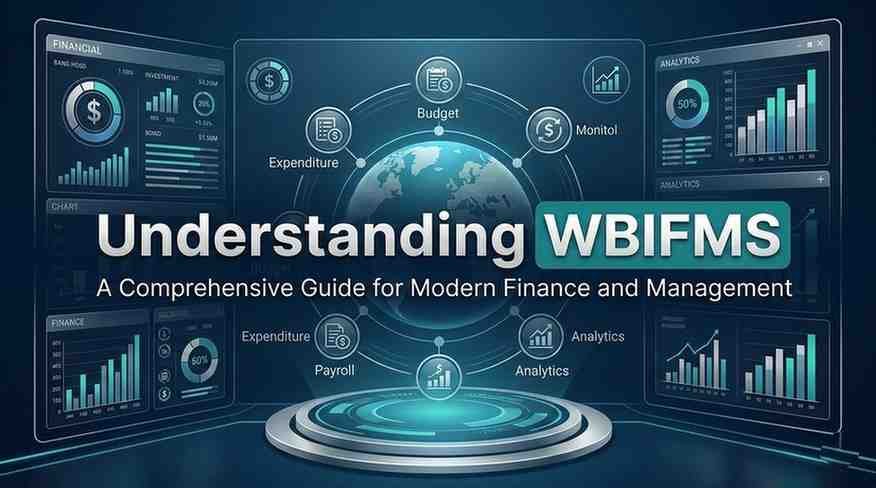
In today’s fast-paced financial landscape, digital tools are reshaping how organizations manage resources, budgets, and operations. One such tool gaining prominence is wbifms, a platform designed to streamline financial management, reporting, and operational efficiency. From government departments to private enterprises, understanding how wbifms functions and its benefits is crucial for decision-makers and finance professionals alike. This guide explores the various facets of wbifms, its applications, and why it’s becoming an indispensable tool in modern finance.
What is wbifms?
wbifms stands for West Bengal Integrated Financial Management System, a digital platform designed to facilitate efficient financial administration. By integrating multiple financial processes, wbifms provides a centralized solution for budgeting, accounting, and expenditure tracking. Unlike traditional systems that rely heavily on manual entries, wbifms leverages automation, reducing errors and improving transparency.
Core Features of wbifms
The platform offers several critical features:
- Real-time monitoring of expenditures and receipts.
- Automated financial reporting for departments and ministries.
- Budget allocation and tracking modules.
- Integration with other government and enterprise systems.
These features make wbifms particularly valuable for organizations aiming to modernize their financial operations while maintaining compliance with regulatory standards.
How wbifms Enhances Financial Transparency
Transparency in financial operations is essential for both public trust and effective management. wbifms ensures that all financial transactions are recorded systematically and can be audited efficiently.
Audit Trails and Compliance
With built-in audit trails, wbifms allows organizations to monitor financial activities, ensuring that all transactions comply with established rules. This reduces the risk of errors, fraud, or mismanagement. Moreover, the system provides detailed reports that can be used for internal audits and statutory compliance, making it a preferred choice for government departments and large institutions.
Applications of wbifms Across Sectors
While wbifms was initially implemented for government financial management, its applications have expanded across various sectors.
Government and Public Sector
In government departments, wbifms helps manage public funds efficiently. Budget allocations, employee salaries, and project expenditures can be monitored in real-time, enhancing accountability.
Private Enterprises
Private organizations also benefit from wbifms’s reporting and tracking modules. By providing insights into cash flow, expenditure patterns, and financial performance, the platform aids strategic decision-making and operational efficiency.
Benefits of Using wbifms
Adopting wbifms offers multiple advantages for organizations seeking to optimize financial management processes.
Improved Efficiency
By automating repetitive tasks such as ledger entries, reconciliations, and report generation, wbifms significantly reduces manual workload. This allows finance teams to focus on strategic planning rather than administrative duties.
Enhanced Accuracy
With its automated validation checks and integrated reporting modules, wbifms minimizes human errors in financial transactions. Accurate data ensures better decision-making and stronger financial health for organizations.
Cost Savings
Although implementation requires an initial investment, the efficiency gains, reduced errors, and improved resource management often result in substantial long-term cost savings.
Common Challenges in Implementing wbifms
While wbifms offers numerous advantages, organizations may face challenges during implementation. Understanding these challenges helps ensure smoother adoption.
Technical Training
Staff may require training to navigate the system efficiently. Proper training programs and user manuals are essential to minimize disruptions.
Integration with Existing Systems
Integrating wbifms with pre-existing financial or ERP systems can be complex. Organizations must plan for data migration and system compatibility to avoid operational delays.
Change Management
Transitioning from manual processes to a fully digital platform can face resistance. Effective change management strategies, clear communication, and stakeholder involvement are crucial for successful implementation.
FAQ Section
Q1: Who can use wbifms?
A: Primarily, government departments and public sector organizations use wbifms, but private enterprises seeking integrated financial management can also adopt it.
Q2: Is wbifms user-friendly?
A: Yes, the platform is designed with user-friendly interfaces, though initial training is recommended for smooth usage.
Q3: Can wbifms generate automated reports?
A: Absolutely, automated reporting is one of its core features, helping organizations save time and improve accuracy.
Q4: Does wbifms support audit and compliance?
A: Yes, with detailed audit trails and compliance tracking, wbifms ensures transparency and accountability in all financial processes.
Q5: Is wbifms suitable for small organizations?
A: While mainly adopted by large institutions, small organizations can also benefit if they require structured financial management and reporting.
Conclusion
In conclusion, wbifms is a transformative financial management platform that integrates accounting, budgeting, and reporting into a single, efficient system. Its ability to enhance transparency, accuracy, and operational efficiency makes it an invaluable tool for modern organizations. While implementation challenges exist, proper planning, training, and integration strategies can ensure successful adoption. As more organizations recognize the benefits of digital financial management, wbifms is poised to become a cornerstone of modern finance and management practices.
By embracing wbifms, organizations not only streamline their financial operations but also foster accountability, accuracy, and strategic growth in an increasingly digital world.


