
Business
Understanding wbifms: A Comprehensive Guide for Modern Finance and Management

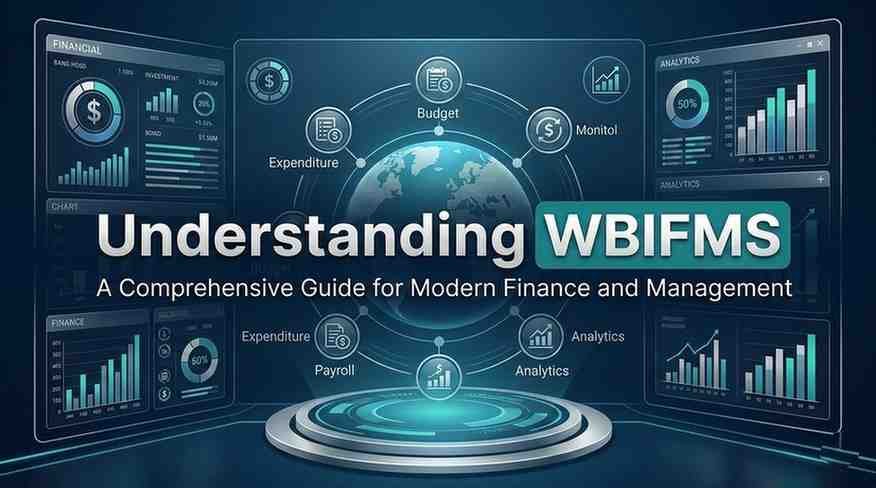
In today’s fast-paced financial landscape, digital tools are reshaping how organizations manage resources, budgets, and operations. One such tool gaining prominence is wbifms, a platform designed to streamline financial management, reporting, and operational efficiency. From government departments to private enterprises, understanding how wbifms functions and its benefits is crucial for decision-makers and finance professionals alike. This guide explores the various facets of wbifms, its applications, and why it’s becoming an indispensable tool in modern finance.
What is wbifms?
wbifms stands for West Bengal Integrated Financial Management System, a digital platform designed to facilitate efficient financial administration. By integrating multiple financial processes, wbifms provides a centralized solution for budgeting, accounting, and expenditure tracking. Unlike traditional systems that rely heavily on manual entries, wbifms leverages automation, reducing errors and improving transparency.
Core Features of wbifms
The platform offers several critical features:
- Real-time monitoring of expenditures and receipts.
- Automated financial reporting for departments and ministries.
- Budget allocation and tracking modules.
- Integration with other government and enterprise systems.
These features make wbifms particularly valuable for organizations aiming to modernize their financial operations while maintaining compliance with regulatory standards.
How wbifms Enhances Financial Transparency
Transparency in financial operations is essential for both public trust and effective management. wbifms ensures that all financial transactions are recorded systematically and can be audited efficiently.
Audit Trails and Compliance
With built-in audit trails, wbifms allows organizations to monitor financial activities, ensuring that all transactions comply with established rules. This reduces the risk of errors, fraud, or mismanagement. Moreover, the system provides detailed reports that can be used for internal audits and statutory compliance, making it a preferred choice for government departments and large institutions.
Applications of wbifms Across Sectors
While wbifms was initially implemented for government financial management, its applications have expanded across various sectors.
Government and Public Sector
In government departments, wbifms helps manage public funds efficiently. Budget allocations, employee salaries, and project expenditures can be monitored in real-time, enhancing accountability.
Private Enterprises
Private organizations also benefit from wbifms’s reporting and tracking modules. By providing insights into cash flow, expenditure patterns, and financial performance, the platform aids strategic decision-making and operational efficiency.
Benefits of Using wbifms
Adopting wbifms offers multiple advantages for organizations seeking to optimize financial management processes.
Improved Efficiency
By automating repetitive tasks such as ledger entries, reconciliations, and report generation, wbifms significantly reduces manual workload. This allows finance teams to focus on strategic planning rather than administrative duties.
Enhanced Accuracy
With its automated validation checks and integrated reporting modules, wbifms minimizes human errors in financial transactions. Accurate data ensures better decision-making and stronger financial health for organizations.
Cost Savings
Although implementation requires an initial investment, the efficiency gains, reduced errors, and improved resource management often result in substantial long-term cost savings.
Common Challenges in Implementing wbifms
While wbifms offers numerous advantages, organizations may face challenges during implementation. Understanding these challenges helps ensure smoother adoption.
Technical Training
Staff may require training to navigate the system efficiently. Proper training programs and user manuals are essential to minimize disruptions.
Integration with Existing Systems
Integrating wbifms with pre-existing financial or ERP systems can be complex. Organizations must plan for data migration and system compatibility to avoid operational delays.
Change Management
Transitioning from manual processes to a fully digital platform can face resistance. Effective change management strategies, clear communication, and stakeholder involvement are crucial for successful implementation.
FAQ Section
Q1: Who can use wbifms?
A: Primarily, government departments and public sector organizations use wbifms, but private enterprises seeking integrated financial management can also adopt it.
Q2: Is wbifms user-friendly?
A: Yes, the platform is designed with user-friendly interfaces, though initial training is recommended for smooth usage.
Q3: Can wbifms generate automated reports?
A: Absolutely, automated reporting is one of its core features, helping organizations save time and improve accuracy.
Q4: Does wbifms support audit and compliance?
A: Yes, with detailed audit trails and compliance tracking, wbifms ensures transparency and accountability in all financial processes.
Q5: Is wbifms suitable for small organizations?
A: While mainly adopted by large institutions, small organizations can also benefit if they require structured financial management and reporting.
Conclusion
In conclusion, wbifms is a transformative financial management platform that integrates accounting, budgeting, and reporting into a single, efficient system. Its ability to enhance transparency, accuracy, and operational efficiency makes it an invaluable tool for modern organizations. While implementation challenges exist, proper planning, training, and integration strategies can ensure successful adoption. As more organizations recognize the benefits of digital financial management, wbifms is poised to become a cornerstone of modern finance and management practices.
By embracing wbifms, organizations not only streamline their financial operations but also foster accountability, accuracy, and strategic growth in an increasingly digital world.


The Options
When homeowners wait too long to decide how they’ll light their homes for the season, the fallout shows up fast—tangled strings pulled from dusty boxes, ladders leaned against icy gutters, and evenings lost to troubleshooting bulbs instead of enjoying the holidays. The stakes go beyond convenience. Poorly installed lighting can create fire hazards, electrical overloads, and falls that send people to the emergency room during the busiest weeks of the year. Ignoring the decision doesn’t make it disappear; it just narrows the window for making a good one. The cost of waiting isn’t only measured in dollars; it also shows up as the missed chance to enjoy a house that feels ready for the season instead of half-finished, and neighbors often notice the difference between a home that feels intentional and one that feels rushed.
Homeowners generally weigh three paths: doing the installation themselves, hiring a handyman for a few hours, or working with a dedicated lighting company that handles design, hanging, and takedown. Each option carries different tradeoffs in cost, time, and safety exposure. The DIY route appeals to those who enjoy the process and already own equipment, though it often eats an entire weekend. A handyman may offer a middle ground on price but rarely specializes in the seasonal nuances of holiday displays. Professional installers tend to cost more upfront but remove most of the physical risk and guesswork.
How to Evaluate
Sorting through these paths gets easier once you look at your own property and schedule rather than general advice. Homes with steep rooflines, mature trees, or multiple stories tend to benefit most from a service such as holiday lighting installation Sandy Utah, since the equipment and experience needed to work safely at height outweigh whatever money might be saved doing it alone. Flat, single-story homes with straightforward eave lines leave more room for a confident DIY attempt, provided the homeowner has the right ladder and enough daylight hours to work carefully.
Time matters as much as physical layout. Anyone juggling work travel, family obligations, or a compressed holiday calendar should weigh how many free evenings actually exist before lights need to be up. Cost comparisons should include the price of replacement bulbs, extension cords, timers, and storage bins, since these add up quickly for a first-time DIY setup. It also helps to ask how take-down will happen in January, since many people underestimate the effort required to remove and store lighting properly once the season ends. Many families also underestimate how weather affects installation windows, since an unexpected cold snap can shrink the number of workable days before decorations are expected to be up.
Making the Decision
A useful way to make the final call is to treat it the same way you’d treat any decision affecting home safety, similar to how public health guidance encourages people to weigh risk before acting rather than after an incident occurs. The CDC health and wellness resources offer a helpful parallel: prevention and preparation consistently cost less, in time and stress, than dealing with an injury or accident after the fact. Applying that same logic to holiday lighting means choosing the option that matches your actual physical ability and schedule, not the one that looks cheapest on paper.
Once the choice is made, sticking with it through the season prevents the common trap of switching methods midway, which often costs more than committing to one plan from the start. Homeowners who choose professional help typically find the peace of mind worth the price, especially during years when weather or personal schedules turn chaotic. Those who choose to handle it themselves should build in extra time and a clear safety plan for ladder use and electrical connections. Whatever path fits your household, the decision becomes far easier once you’ve honestly assessed your home’s layout, your available time, and your comfort with the physical demands involved.

How a U.S. Business Entity Can Help International Entrepreneurs Grow is a common question for founders who sell across borders. Many international entrepreneurs reach a point where a local setup is no longer enough for payments, customers, vendors, or future funding.
A U.S. business entity can give a company a clearer legal identity. It can also make the business easier to understand for partners in the United States and other markets. Still, it is not a magic fix. I see it as a serious business step that works best when the founder has a clear plan.
What Is a U.S. Business Entity?
A U.S. business entity is a legal structure formed under state law. Common options include a limited liability company, often called an LLC, and a corporation, often called a C corporation.
The U.S. Small Business Administration says business structure can affect taxes, paperwork, personal liability, and the ability to raise money. This is why founders should not choose a structure only because it looks popular online. The right choice depends on the business model, ownership plan, funding goals, and tax position.
For international entrepreneurs, a U.S. entity can help separate personal activity from business activity. It can also make the company look more organized when dealing with platforms, clients, and service providers.
Why a U.S. Entity Can Build Business Trust
Trust is one of the biggest barriers for international founders. A customer, supplier, or software platform may not understand a company formed in another country. They may ask for extra proof before they approve an account or sign a contract.
A U.S. entity can reduce some of that friction. It gives the business a formal name, a state registration record, and a structure that many companies already recognize.
During early research, founders may compare resources from providers such as TKEG Expat to understand how cross-border company setup works. This type of research can help entrepreneurs learn what documents, filings, and planning steps may be involved before making a decision.
How It Can Help With Payments and Banking
Online businesses need smooth payment collection. This is true for e-commerce stores, SaaS companies, consultants, agencies, course creators, and digital product sellers.
A U.S. company may help a founder apply for payment processors, business accounts, and merchant tools. Approval is never guaranteed. Payment providers still review risk, ownership, business activity, and documents.
Still, a formal U.S. entity can give founders a better starting point. It may make the application process clearer because the business has a registered structure and can apply for a federal tax ID when required.
Why Legal Structure Matters for Growth
A business can grow faster when its structure is easy to understand. This is important when the founder wants to bring in partners, work with larger clients, or raise money.
The SBA notes that corporations can raise funds through the sale of stock, which can be useful for companies that plan to raise capital or sell the business later.
This does not mean every founder needs a corporation. Some small service businesses may prefer a simpler structure. A startup that wants investors may need a different setup. I always suggest matching the entity type to the future plan, not just the current need.
How an EIN Supports Business Operations
An Employer Identification Number, or EIN, is a federal tax ID used by businesses and other entities. The IRS says a business should form its legal entity before applying for an EIN.
An EIN can be useful for tax records, business banking, payment platforms, and vendor forms. For non-U.S. founders, this step can feel confusing because the process may differ based on where the owner lives and how the company is formed.
This is one reason planning matters. A founder should understand the company structure, state filing, ownership details, and tax responsibilities before applying for an EIN.
When Non-Resident Founders May Need Setup Support
Some entrepreneurs can handle basic company formation on their own. Others may need help because they are dealing with foreign ownership, state choice, registered agent rules, EIN preparation, or document requirements.
At this stage, a founder may review a U.S. Company Incorporation Service for Non Residents to understand what support is available during the setup process. The goal should not be to rush into registration. The goal should be to avoid mistakes that can create tax, filing, or banking problems later.
What Founders Should Consider Before Registering
A U.S. entity can help, but it also brings duties. Before registering, I would review these points:
- The best state for formation.
- LLC vs C corporation structure.
- Registered agent needs.
- EIN requirements.
- Annual state filings.
- U.S. tax reporting.
- Banking and payment goals.
- Long-term funding plans.
Final Thoughts
A U.S. business entity can help international entrepreneurs grow by improving trust, supporting payment access, creating a clear legal structure, and making future expansion easier.
My advice is to treat U.S. company formation as a planned business decision. Study the structure, costs, tax duties, and long-term goals before moving forward. With the right setup, a U.S. entity can become a useful base for serving customers, working with partners, and building a stronger international business.


Most people assume they’re decent communicators. They speak clearly, they listen (mostly), and they rarely cause obvious offence. Yet in every organisation, the same friction keeps appearing: projects stall because someone misread the brief, a good idea dies in a poorly run meeting, or a relationship between two colleagues quietly sours because a message landed the wrong way.
Communication breakdown is almost never dramatic. It’s the slow drip of small misalignments — and the cost is real. Here are five of the most common barriers to communication at work, along with practical ways to get past them.
Barrier 1: You’re Not Actually Hearing What They’re Saying
The most widespread communication problem isn’t speaking — it’s listening. More precisely, it’s the gap between what someone says and what you think they said. You hear the words, but you interpret them through your own assumptions, your own priorities, and whatever’s already on your mind.
Think of a manager who asks a colleague to “sort out the report by Friday.” The colleague delivers a lightly edited version on Thursday afternoon. The manager expected a full restructure. Neither person was wrong in what they understood — they just weren’t aligned. And nobody checked.
The fix is to get into the habit of reflecting back. Before you act on an instruction, or before you close a conversation, briefly summarise what you understood. Not defensively — just practically. “So just to confirm, you’re looking for a full rewrite, not just a proofread?” That one sentence could have saved an afternoon of rework.
It sounds obvious. But very few people do it consistently.
Barrier 2: You’re Trying to Say Too Much at Once
Information overload is one of the most overlooked barriers to communication in workplaces — partly because it comes from a good place. You want to be thorough. You want to give context. You want to make sure nothing is missed.
The result, though, is that people stop listening halfway through, retain the last thing you said, or simply glaze over. A five-minute explanation of three interconnected issues, delivered without a clear structure, leaves the other person more uncertain than when you started.
The better approach: lead with what matters most. State your point first, then provide context if it’s needed, then invite questions. In written communication — email especially — one clear message per message is a rule worth adopting. Long emails with multiple threads buried inside them get partially answered at best and ignored at worst.
If you find yourself saying “there’s one more thing” more than once in a conversation, that’s a signal to stop, restructure, and come back when you’re clearer about what you actually need to communicate.
Barrier 3: Staying Quiet When You Should Speak Up
Shyness, self-doubt, and a fear of looking foolish are among the most personal communication challenges — and among the most damaging when left unaddressed. People hold back a concern in a meeting. They don’t challenge an assumption that turns out to be wrong. They sit on a good idea for weeks because the moment never felt right.
This affects people at every level, not just the new or junior. Even experienced professionals go quiet in environments where speaking up feels risky.
The most effective remedy isn’t a confidence programme or a pep talk — it’s structure. When people know they’ll be directly invited to contribute, the pressure of volunteering a voice drops considerably. If you’re running a meeting, go round the table. If you’re managing a team, have one-to-ones where there’s no agenda except “what are you thinking about?” If you’re the quiet one, practise contributing small things regularly. The longer you stay silent, the harder it becomes to break in.
Barrier 4: Emotions in the Room
Frustration, stress, defensiveness, and anxiety all distort communication in ways that are easy to recognise in other people and very hard to see in ourselves. When emotions run high, the content of a conversation matters less than the tone — and tone is almost impossible to manage when you’re reactive.
Consider someone who has just learned that a major project deadline has moved forward by two weeks. They go to a team meeting and don’t mention how stressed they feel. Instead, they speak more bluntly than usual, dismiss a couple of suggestions, and leave the room having technically communicated all the facts — but having also quietly unsettled three colleagues.
The principle here isn’t to suppress emotions. It’s to name them appropriately. There’s a significant difference between “that’s a terrible idea” and “I’m under a lot of pressure right now and I want to make sure we’re not adding complexity.” Both can come from the same feeling; one is productive, one isn’t. Pausing before reacting — even briefly — and asking whether the emotion is shaping the message is a habit that takes time to build but pays back considerably.
Barrier 5: When Technology Gets in the Way
Digital tools have made communication faster. But they haven’t always made it better. Misunderstandings driven by technology are now one of the more persistent communication barriers in modern work — and the problem isn’t the tools themselves, it’s the assumptions people bring to them.
Tone is almost invisible in text. A short reply to a thoughtful message can read as dismissive even when it isn’t. An exclamation mark that feels friendly to the sender can come across as passive-aggressive to the recipient. And messages sent late at night, even with no expectation of a response, can create a low-level sense of pressure that builds over time.
The discipline here is to match the tool to the message. Quick, transactional updates work well over instant messaging. Anything complex, sensitive, or emotionally loaded almost always needs a voice conversation or a video call. If you find yourself writing and rewriting a message because you can’t get the tone right, that’s usually a signal that you shouldn’t be writing it at all — you should be picking up the phone.
What Happens When You Fix These Things
The individual benefits are immediate. You spend less time correcting misunderstandings, you feel more confident in meetings, and your relationships with colleagues are less strained. Over time, you become someone people actually want to work with — not just someone they work alongside.
For a team, the gains are substantial. Fewer projects go off-track because of miscommunication. Meetings become shorter and more decisive. People speak up earlier, which means problems surface while they’re still small.
And for the company as a whole, the compounding effect is significant. Poor internal communication quietly erodes productivity, drives turnover, and creates the kind of low-trust culture where good people stop trying. Organisations where people communicate well — clearly, honestly, and without unnecessary friction — don’t just function more smoothly. They adapt faster, make better decisions, and retain the kind of talent that has choices.
None of these barriers to communication are solved overnight. But they are all solvable, and the starting point is simpler than people expect: pay more attention to how you’re communicating, not just what you’re saying.